
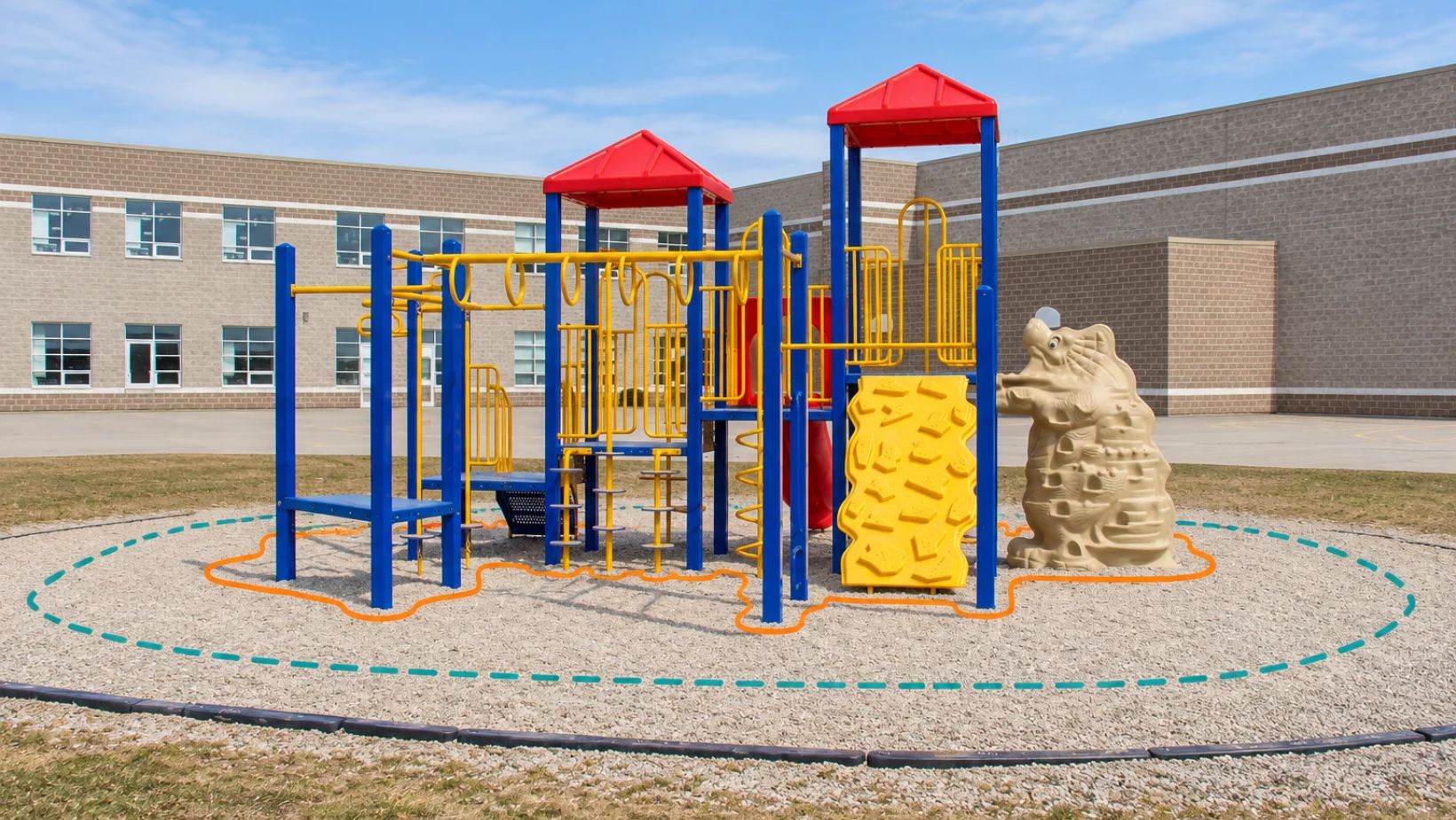
A playground can look like a perfect fit on paper. There’s room for a climber, a slide and a few other activities, with space left for a bench. But checking the playground equipment footprint is only the beginning. Children also need room around the equipment as they play.
That surrounding space can change which components suit your property and where they belong. Understanding equipment dimensions and use zones helps you make better decisions before you place an order.
What Does Playground Equipment Footprint Mean?
The playground equipment footprint shows how much space the complete structure takes up, including slides, steps and other attached features. Think of tracing the equipment’s outside edges onto a site plan.
However, suppliers don’t always use “footprint” the same way. Some use it for the equipment’s physical dimensions; others include surrounding clearances in the measurement. Always confirm what a listed dimension covers.
Ask for a drawing that identifies both the equipment dimensions and its required use zone. That’s more useful than relying on a photograph or a length and width with no explanation.
What Is a Playground Use Zone?
A playground use zone is the area beneath and around equipment where a child could be expected to land after falling or exiting. It also accommodates circulation around the equipment. Protective surfacing within these areas must meet applicable impact attenuation requirements.
The distinction matters because equipment occupies space even when nobody is using it, while the use zone accounts for what happens during play.
Picture a child reaching the bottom of a slide. The slide ends, but the child still needs room to exit. Measuring only to the end of the plastic chute doesn’t account for that surrounding area.
How the Playground Equipment Footprint Affects Your Layout
Start with the equipment outline, then review its use zone within the wider site. You’ll also need to consider how families enter, where caregivers sit and how people move between activities.
These three measurements answer different planning questions.
| Measurement | What it tells you |
| Equipment dimensions | The physical size of the complete play structure or component |
| Use zone | The area beneath and around equipment needed for its use |
| Overall site area | The full space available for equipment, routes, amenities and other features |
A large property doesn’t automatically offer a large usable play area. An awkward boundary or an existing tree may limit where a particular structure can go.
Equipment Placement and Nearby Obstacles
Mark fences, trees, buildings and benches on your site plan before choosing equipment locations. Their positions can affect the layout.
Keep use zones free of obstacles that children could strike when falling or exiting the equipment. Slides and moving equipment have their own spacing considerations, so the clearance needed around one component may differ from another.
For an early layout review, ask a practical question. Where will children go immediately after finishing each activity? This helps identify arrangements worth discussing with your playground supplier.
Protective Surfacing and Project Costs
Surfacing is another reason to look beyond equipment dimensions. The area needing playground safety surfacing may be considerably larger than the structure itself.
When comparing quotes, check whether surfacing quantities reflect the proposed layout. Ask what site preparation, drainage work, installation and ongoing upkeep are included.
A smaller equipment purchase won’t necessarily produce a proportionate reduction in the total project cost. Get the complete space requirements before setting your budget.
What to Check Before Choosing Outdoor Playground Equipment
Good outdoor playground planning starts with useful information about the site. You don’t need every decision finalized, but accurate measurements make discussions more productive.
Before requesting recommendations, gather the following.
- Site dimensions with the shape and boundaries clearly marked.
- Photographs showing the property and existing features.
- Intended age groups and the types of play you want to offer.
- Existing equipment details if you’re adding to a playground.
- Access information for installation and future maintenance.
- Budget and timeline including site work and surfacing.
Then request drawings that distinguish the playground equipment footprint from the surrounding use zone. Review the complete configuration, since changing a slide or adding a climber can affect the plan.
Before ordering, have the complete layout reviewed against the safety and accessibility requirements that apply where the playground will be installed. These can vary by country or region, so confirm that the equipment, surfacing and installation plans suit your project’s location.
Find the Right Outdoor Playground Equipment for Your Space
A successful playground plan accounts for the equipment, the space around it and the people using the site. Confirming those details early helps you choose components with a clearer picture of the complete project.
SPI Plastics offers outdoor playground equipment, including slides, climbers, tubes and activity panels. Share your site measurements, photographs and project goals, and we can help you explore equipment options for your space. Contact SPI Plastics to discuss your outdoor playground project and take the next step toward a well planned play area.